


Achieve superior thermal performance in confined spaces with Vacuum Insulation Panels (VIPs) for Slim Walls. A practical look at their efficacy and challenges.
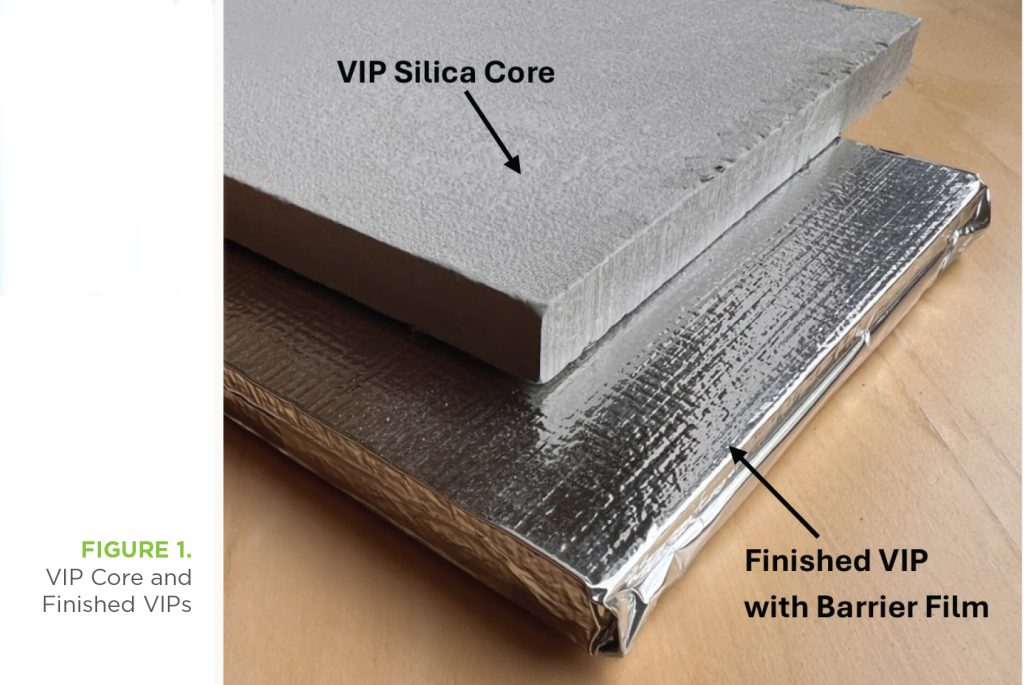
Working on building projects where every millimeter counts, I’ve seen firsthand the struggle to meet modern energy codes within existing footprints. Traditional insulation materials, while effective, often demand considerable thickness. This becomes a significant issue in urban environments or renovation projects where maximizing usable interior space is paramount. The need for high-performance thermal barriers in extremely slim profiles led many of us in the industry to explore advanced solutions.
Overview
- Vacuum Insulation Panels (VIPs) for Slim Walls offer exceptionally high thermal resistance (low U-value) with minimal thickness.
- Their core principle relies on creating a vacuum within a sealed envelope, eliminating convection and conduction through air.
- VIPs are crucial for achieving stringent energy targets in space-constrained building designs and retrofits.
- Proper handling and installation are critical to maintain the integrity of the vacuum and panel performance.
- While initial costs can be higher, the long-term energy savings and reclaimed floor area often justify the investment.
- Common applications include facades, floors, roofs, and specialized thermal bridges in both new builds and deep energy retrofits across the US.
The Science Behind High-Performance Slim Insulation
At its core, insulation works by trapping air to prevent heat transfer. Most conventional insulation materials like fiberglass or rigid foam boards rely on a matrix of fibers or cells to immobilize air, thus reducing conduction and convection. While effective, this approach requires thickness to achieve significant thermal resistance. The R-value, or thermal resistance, is directly proportional to material thickness for these standard products.
Vacuum Insulation Panels (VIPs) operate on a fundamentally different principle. They create an internal vacuum, virtually eliminating all gaseous conduction and convection. A porous core material, often fumed silica or a fiberglass mat, supports the panel’s structure against atmospheric pressure. This core is then encased in a gas-tight, multi-layer metallic barrier film, and the air is evacuated. This vacuum is what provides the extraordinary insulation properties, far surpassing traditional materials for a given thickness. The typical R-value for VIPs can be R-30 or more per inch, compared to R-3 to R-6 per inch for common insulations.
Practical Implementation of Vacuum Insulation Panels (VIPs) for Slim Walls
In my experience, deploying Vacuum Insulation Panels (VIPs) for Slim Walls offers clear advantages for specific construction scenarios. Imagine a historic brick building undergoing a deep energy retrofit in a dense urban setting. Adding traditional insulation to the interior walls would drastically reduce precious interior space, impacting rental income or usability. Exterior insulation might alter the facade, which is often impermissible. This is where VIPs shine.
We’ve used them on interior furring walls, beneath slab-on-grade foundations, and within flat roof assemblies where parapet heights are fixed. Their slim profile allows architects to meet stringent passive house standards or achieve significant energy reduction without expanding the building envelope or sacrificing usable square footage. For example, a 1-inch VIP can outperform 6-8 inches of traditional insulation, a difference that translates to square feet of valuable space, especially across a large floor plate. Careful planning during the design phase is crucial to integrate these panels effectively.
Key Installation Considerations for Vacuum Insulation Panels (VIPs) for Slim Walls
Proper installation is paramount to the long-term efficacy of Vacuum Insulation Panels (VIPs) for Slim Walls. These panels are incredibly robust in terms of thermal performance but also surprisingly delicate regarding their vacuum seal. Any puncture, even a small one, will compromise the vacuum, causing a significant and irreversible drop in insulation performance. Therefore, handling requires extreme care.
We always emphasize cutting only where absolutely necessary, using specific tools and techniques to minimize risk. Field cutting panels is generally not recommended, as it compromises the factory seal. Instead, precise measurements and custom panel sizing during the ordering process are critical. Installation teams must be trained to avoid sharp objects, abrasive surfaces, or excessive compression. Protecting the panels during and after installation with a robust sacrificial layer, such as plywood or cement board, is a common practice to shield them from punctures. Managing thermal bridging at panel joints and penetrations also requires meticulous detailing to maintain performance.
Long-Term Performance and Cost-Benefit of Vacuum Insulation Panels (VIPs) for Slim Walls
Assessing the long-term performance and cost-benefit of Vacuum Insulation Panels (VIPs) for Slim Walls involves more than just upfront material cost. While the initial investment for VIPs is typically higher than for conventional insulation, their superior thermal resistance leads to substantial energy savings over the building’s lifespan. In regions like the US with rising energy costs, this payback period can be surprisingly attractive. The energy performance gain from using VIPs can reduce HVAC system sizing, further offsetting costs.
Moreover, the added usable floor area gained by using slim insulation is a significant economic benefit, particularly in high-value real estate markets. From an operational standpoint, a properly installed VIP system can contribute to a more stable indoor environment, reducing temperature fluctuations and improving occupant comfort. We also consider the durability of the panels, acknowledging that the vacuum can degrade over decades, albeit very slowly, typically retaining high performance for many years under proper conditions. The return on investment often extends beyond energy savings, encompassing the intrinsic value of optimized space and enhanced building performance.


