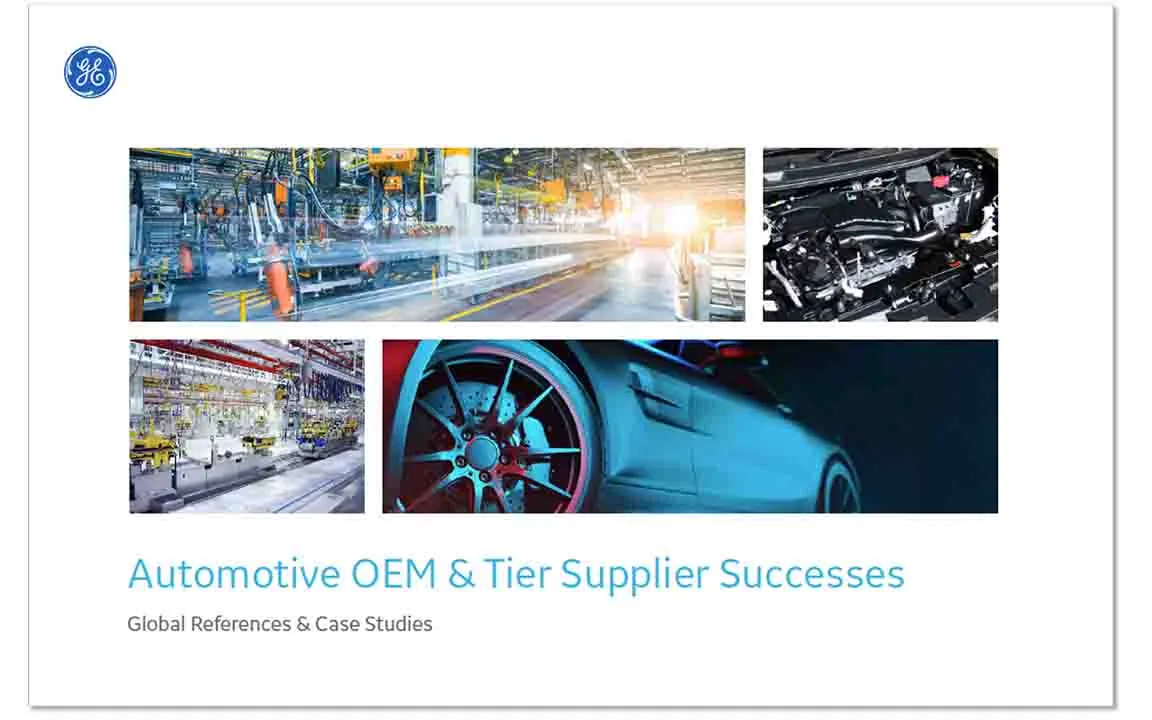


The automotive industry is undergoing a massive shift, driven by the need for increased efficiency, improved quality, and faster innovation cycles. At the heart of this revolution lies the Smart Factory (Automotive), a concept that leverages cutting-edge technologies to create interconnected, data-driven manufacturing ecosystems. These factories are not just about automation; they are about intelligent systems that can learn, adapt, and optimize processes in real time. The right tools and solutions are essential to realize the full potential of a Smart Factory (Automotive). Without them, the vision remains just that – a vision. Let’s explore how we can provide tools and solutions to propel the automotive industry forward.

Key Takeaways:
- Smart Factory (Automotive) implementations are fundamentally changing how cars are made, focusing on data-driven optimization.
- IoT, AI, and data analytics are key components of a successful Smart Factory (Automotive), driving efficiency and quality.
- Predictive maintenance and digital twins are essential tools for minimizing downtime and improving operational performance.
- Adopting a Smart Factory (Automotive) approach requires careful planning, integration, and a commitment to continuous improvement.
Understanding the Core Technologies of a Smart Factory (Automotive)
Several key technologies underpin the functionality of a Smart Factory (Automotive). The Internet of Things (IoT) forms the foundation, connecting machines, sensors, and systems to create a vast network of data collection points. These sensors collect data on everything from machine performance and environmental conditions to the movement of materials and the status of finished products. This data is then fed into advanced analytics platforms, where it is processed to identify patterns, trends, and anomalies.
Artificial Intelligence (AI) plays a crucial role in analyzing this data and making intelligent decisions. AI algorithms can optimize production schedules, predict equipment failures, and even identify defects in real-time using computer vision. Furthermore, digital twins, virtual replicas of physical assets or processes, enable manufacturers to simulate different scenarios and test new strategies without disrupting actual production. These core technologies, when integrated effectively, enable a level of visibility and control that was previously impossible, allowing us to make better informed decisions and achieve significant improvements in efficiency and quality.
Implementing Automation Solutions in a Smart Factory (Automotive)
Automation is not a new concept in automotive manufacturing, but the Smart Factory (Automotive) takes it to a whole new level. Instead of just automating repetitive tasks, Smart Factory (Automotive) are implementing automation solutions that are more flexible, adaptable, and intelligent. Collaborative robots (cobots) can work alongside human workers, assisting with physically demanding tasks and improving safety. Autonomous guided vehicles (AGVs) can transport materials and components throughout the factory, optimizing logistics and reducing bottlenecks.
More advanced automation solutions involve closed-loop control systems, which automatically adjust process parameters based on real-time data. For example, a welding robot can automatically adjust its settings based on the temperature of the workpiece and the quality of the weld. By automating these complex tasks, automotive manufacturers can improve consistency, reduce errors, and free up human workers to focus on more creative and strategic activities. This leads to increased overall productivity and improved product quality for us.
Leveraging Data Analytics for Predictive Maintenance in a Smart Factory (Automotive)
One of the most significant benefits of a Smart Factory (Automotive) is the ability to leverage data analytics for predictive maintenance. Instead of relying on traditional time-based maintenance schedules, automotive manufacturers can use data from sensors and equipment to predict when a machine is likely to fail. This allows them to schedule maintenance proactively, minimizing downtime and preventing costly breakdowns.
Predictive maintenance can also help to optimize maintenance schedules, ensuring that machines are only maintained when necessary. This reduces maintenance costs and extends the lifespan of equipment. By analyzing historical data and identifying patterns, predictive maintenance can even uncover hidden causes of equipment failure, leading to improved maintenance procedures and equipment design. Ultimately, this contributes to a more efficient and reliable production process, allowing us to deliver higher-quality vehicles to customers.
Addressing Challenges and Future Trends in Smart Factory (Automotive)
While the benefits of a Smart Factory (Automotive) are clear, implementing such a system is not without its challenges. Integrating different technologies and systems can be complex and costly. Data security is also a major concern, as the interconnected nature of the Smart Factory (Automotive) creates new vulnerabilities. Furthermore, workforce training is essential to ensure that workers have the skills needed to operate and maintain the new technologies.
Looking ahead, the Smart Factory (Automotive) is likely to become even more intelligent and autonomous. AI and machine learning will play an increasingly important role in optimizing processes and making decisions. Digital twins will become more sophisticated, allowing manufacturers to simulate entire production lines in real-time. And the use of augmented reality (AR) and virtual reality (VR) will become more widespread, enabling workers to visualize data and collaborate remotely. These trends suggest that the Smart Factory (Automotive) will continue to evolve, becoming an even more powerful tool for automotive manufacturers to improve efficiency, quality, and innovation, for all of us. By Smart Factory (Automotive)