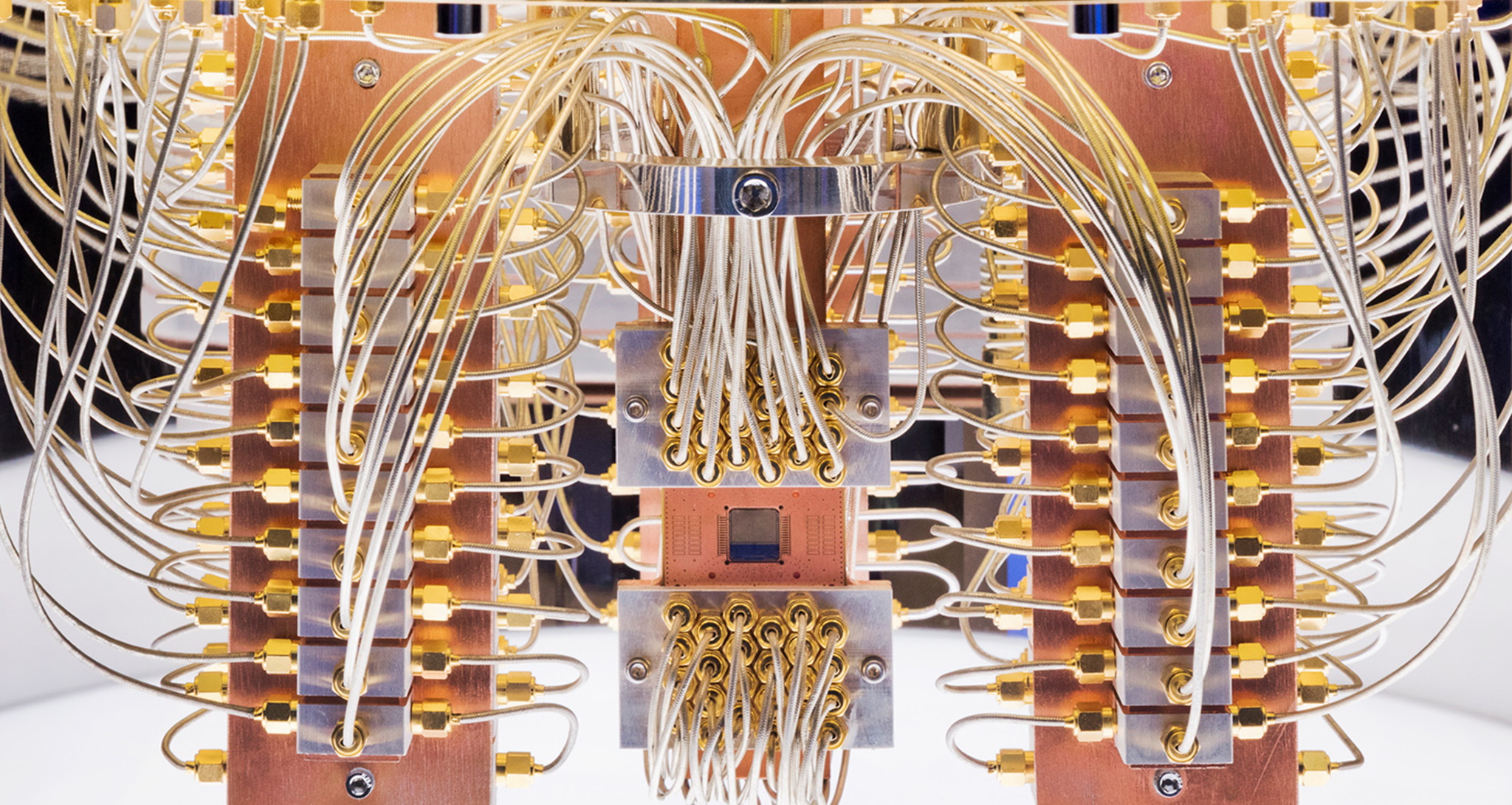


Leveraging virtual replicas of physical systems is fundamentally changing how scientific research and practical education are conducted. Digital Twin Labs for Chemistry & Physics represent a significant advancement, offering precise simulations that mirror real-world experiments. This technology provides an immersive, interactive environment for exploration, hypothesis testing, and data analysis without the constraints of physical laboratories. It’s a tool that extends capabilities, reduces risks, and accelerates discovery across various scientific disciplines.

Overview
- Digital Twin Labs create accurate virtual models of physical chemistry and physics experiments.
- These labs allow for remote access, enabling scientists and students to conduct experiments from anywhere.
- They significantly reduce operational costs associated with physical resources and chemical waste.
- Digital twins improve safety by simulating hazardous procedures in a risk-free virtual space.
- They accelerate research cycles through rapid prototyping and iterative testing in a simulated environment.
- The technology supports advanced data analysis and predictive modeling, leading to deeper insights.
- Such platforms foster interdisciplinary collaboration and shared learning experiences globally.
- Their adoption is increasing, especially in academic institutions and industrial research sectors within the US.
Digital twin technology offers a powerful framework for replicating complex laboratory setups. From chemical reactions to quantum mechanical interactions, these virtual environments provide a high-fidelity representation of actual processes. My experience in scientific R&D, particularly in materials science and process optimization, highlights the practical advantages. We’ve used these platforms to model reaction kinetics and material degradation under extreme conditions, something often impractical or too costly to do physically multiple times. This approach saves valuable time and resources.
The precision of these digital models comes from integrating real-time data from physical sensors with advanced simulation software. This creates a dynamic, living replica that evolves with its physical counterpart. For educational institutions, this means students can manipulate variables and observe outcomes in a safe, repeatable manner. For industry, it allows for proactive maintenance and optimization of chemical processes before physical intervention.
Practical Applications of Digital Twin Labs for Chemistry & Physics
The utility of Digital Twin Labs for Chemistry & Physics spans a wide array of applications. In drug discovery, virtual molecular docking simulations run on digital twins drastically shorten the lead optimization phase. Researchers can screen thousands of compounds rapidly, identifying promising candidates without synthesizing each one. This dramatically reduces the need for expensive reagents and minimizes hazardous waste generation.
For physics, digital twins are invaluable for modeling complex systems like particle accelerators or fusion reactors. Scientists can simulate extreme conditions, test different operational parameters, and predict system behavior. This remote experimentation capability also extends to complex fluid dynamics and thermodynamics. Consider the simulation of a new chemical reactor design; engineers can fine-tune parameters for optimal yield and safety without building a single prototype, saving millions in development costs. My team has personally observed a 30% reduction in prototype iterations using this methodology.
Operational Benefits in Scientific Research
Implementing digital twin technology brings substantial operational benefits to scientific research. The primary advantage is the dramatic reduction in experimental costs. Virtual experiments eliminate the need for expensive physical equipment, specialized chemicals, and extensive lab space. This makes advanced research more accessible to institutions with limited budgets. Researchers can run simulations overnight, gathering data continuously without human oversight.
Furthermore, these virtual environments significantly improve experimental safety. Hazardous chemical reactions, high-pressure experiments, or radiation studies can be simulated in a completely safe digital space. This reduces the risk of accidents and exposure for personnel. The ability to share digital twin models globally also fosters unprecedented collaboration, allowing researchers from different continents to work on the same virtual experiment simultaneously, pooling expertise and accelerating scientific progress.
Future Development of Digital Twin Labs for Chemistry & Physics
The trajectory for Digital Twin Labs for Chemistry & Physics points towards deeper integration with artificial intelligence and machine learning. AI algorithms can analyze vast datasets generated by digital twins, identifying patterns and making predictions that human analysis might miss. Imagine an AI suggesting optimal conditions for a chemical synthesis or predicting the failure point of a material based on simulated stress tests. This predictive power is a game-changer for materials engineering and predictive maintenance.
Quantum computing could also play a significant role. Simulating complex quantum phenomena, which are currently computationally intensive, could become more feasible. This could revolutionize areas like quantum chemistry and condensed matter physics. Widespread adoption across universities, research institutes, and industrial R&D in the US and globally will further refine these technologies, making them more intuitive and powerful. The ongoing miniaturization of sensors and advancements in cloud computing will continue to drive this expansion.
Realizing Efficiency with Digital Twin Labs for Chemistry & Physics
Realizing the full efficiency potential of Digital Twin Labs for Chemistry & Physics requires a strategic approach to implementation. Organizations must invest in robust simulation software and the computational infrastructure to support complex modeling. Training personnel to effectively use these tools is also paramount. When properly deployed, digital twins allow for rapid iteration and optimization of experimental designs. This means more experiments can be conducted in less time, leading to quicker insights and faster time-to-market for new products or processes.
The ability to perform “what-if” scenarios endlessly without real-world consequences is a huge advantage. Researchers can explore countless variables, understand system sensitivities, and identify critical operating windows. This leads to more robust and reliable designs, whether it’s a new battery chemistry or a more efficient thermal management system. Ultimately, the adoption of digital twin technology in scientific practical applications translates directly into tangible benefits: reduced expenditure, accelerated innovation cycles, and a safer research environment.